The Storm Hits
It only takes a few seconds. A gust catches a mature tree the wrong way, a limb gives out, and suddenly a quiet Beavercreek afternoon turns into an emergency call to a roofing contractor.
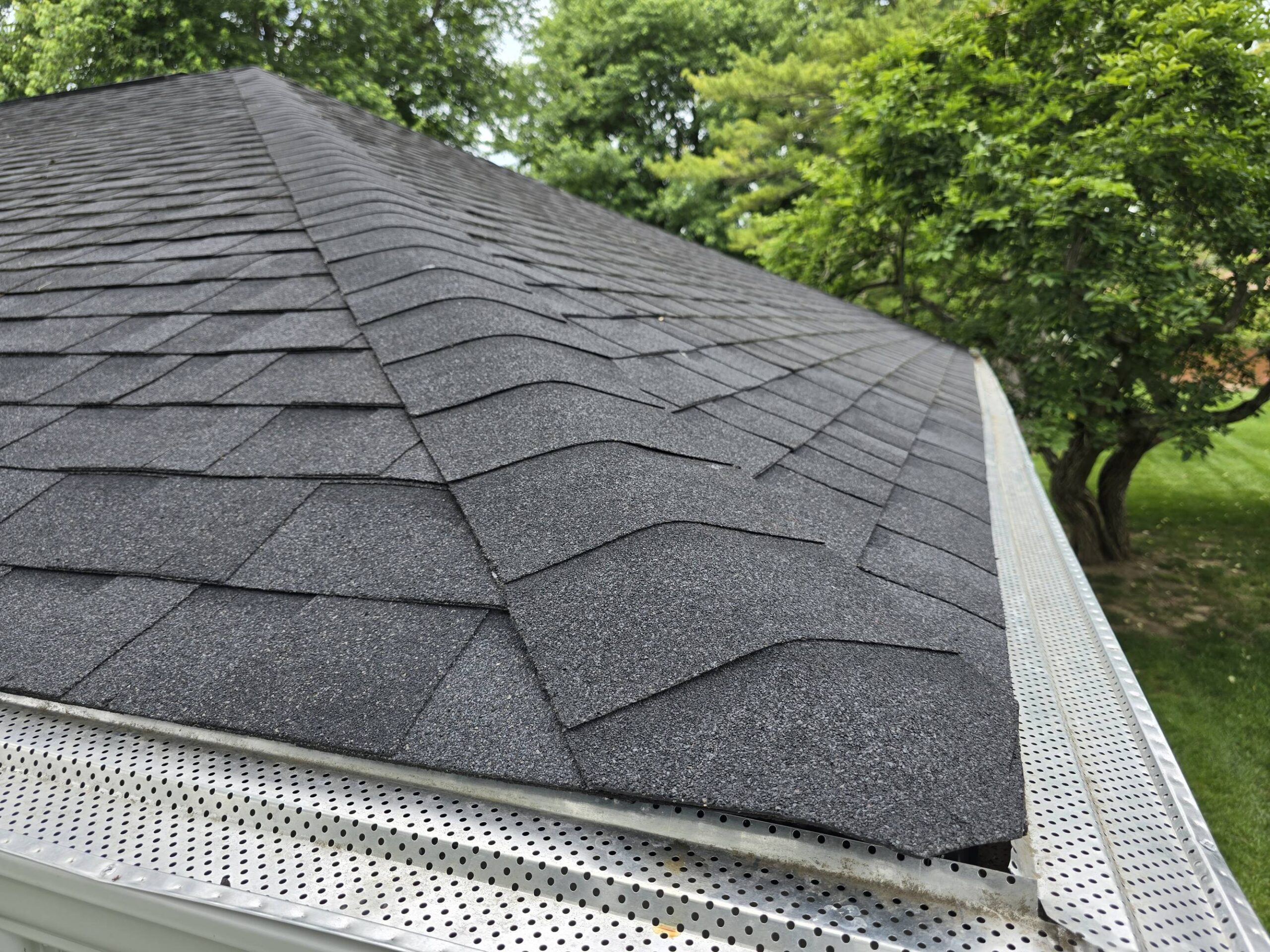
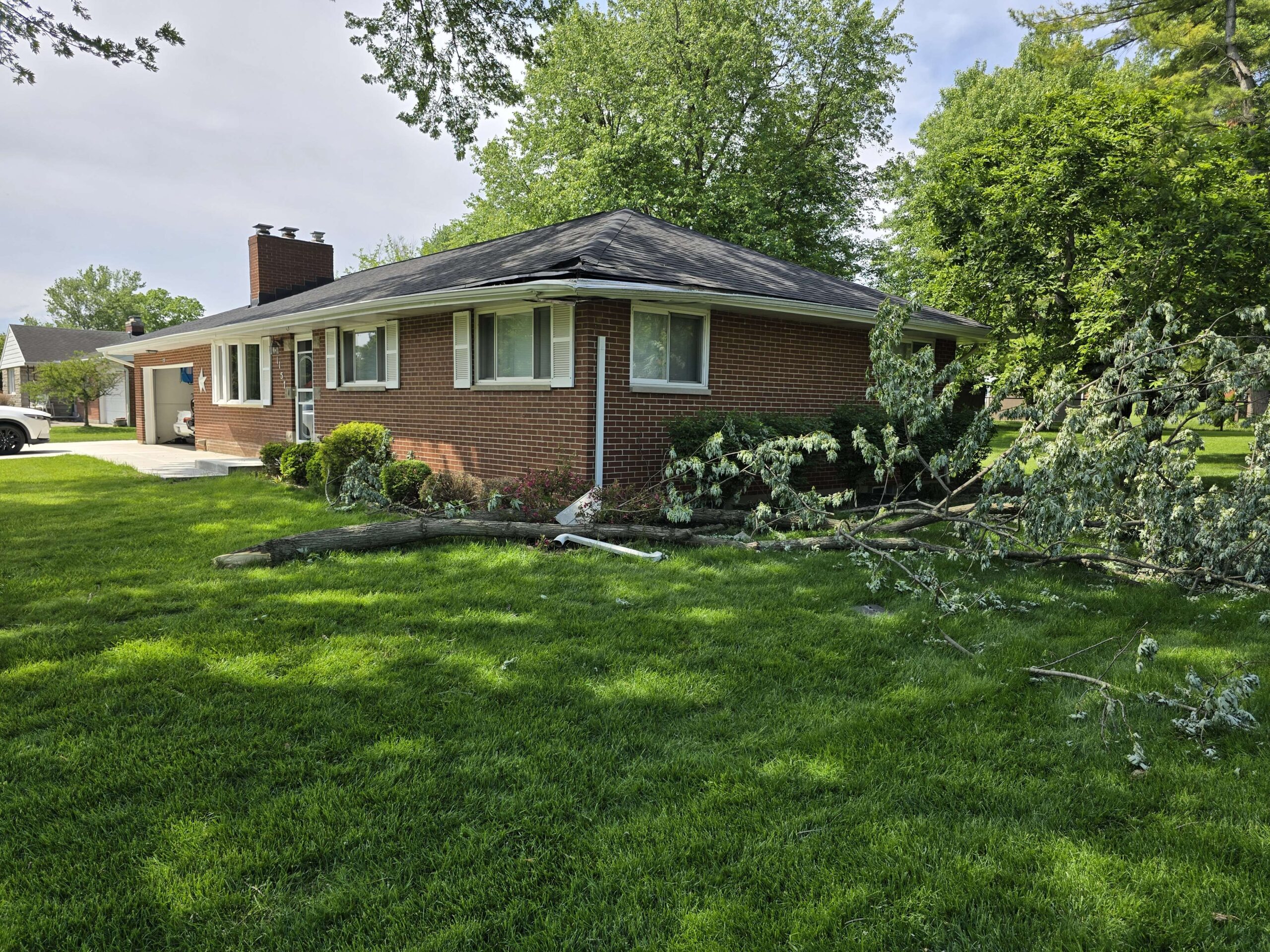
That’s what happened at this home. A storm tore through the neighborhood and brought a large limb down across the roofline, tearing shingles loose and splitting open the soffit and fascia along one side of the house. By the time the branches were cleared, the damage was hard to miss, curled and torn shingles at the roof’s edge, exposed wood where the fascia had cracked, and a soffit panel hanging loose above a bedroom window.
For a homeowner, moments like this come with two problems at once: the physical damage to the house, and the question of what happens next. Who do you call first? A contractor, or the insurance company? How fast can this actually get fixed? Is the whole roof compromised, or just this one section?
Every day a damaged roof sits unrepaired is another day it’s exposed to rain, wind, and further deterioration, so speed mattered just as much as getting the repair right.
The Tree - What Actually Happened
Trees fail quietly, for the most part. The damage that ends up on a roof usually begins somewhere unseen, a weak fork in the branches, a limb carrying more weight than it was built for, a gust that finds the one angle a tree can’t withstand.
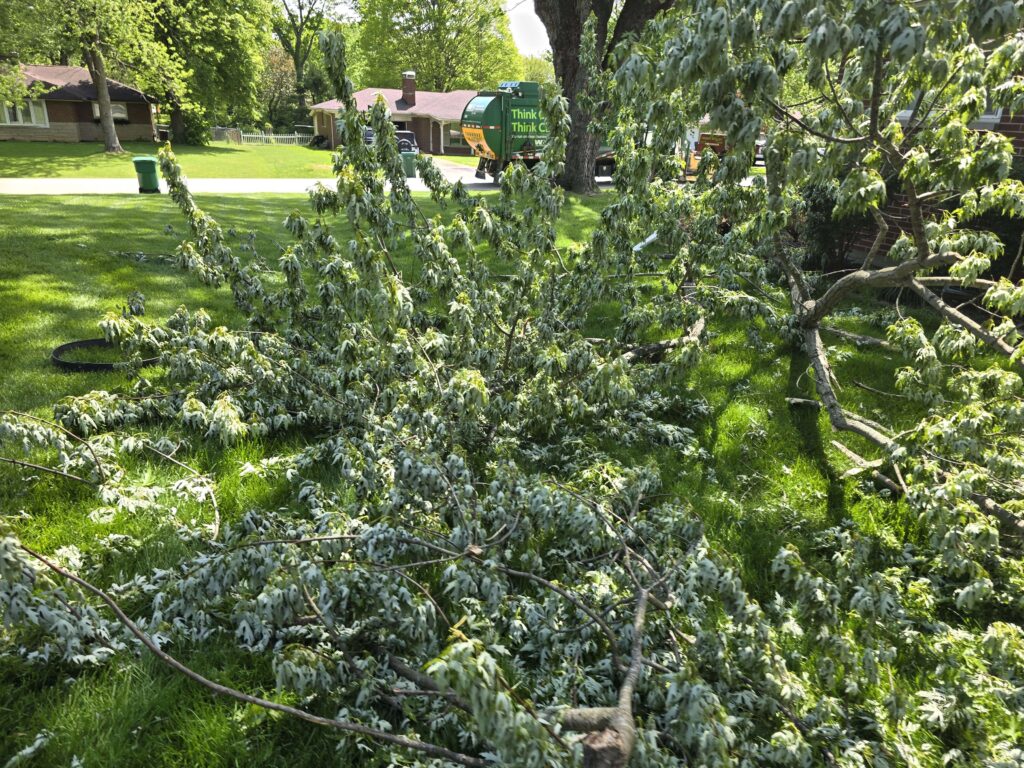
In this case, the break happened high in the canopy, where a heavy limb tore away from the trunk, leaving a long pale scar of exposed wood against the bark. It’s the kind of damage that’s easy to miss from the ground. Most of the tree still stood green and intact; only the wound at the fork gave away what had happened.
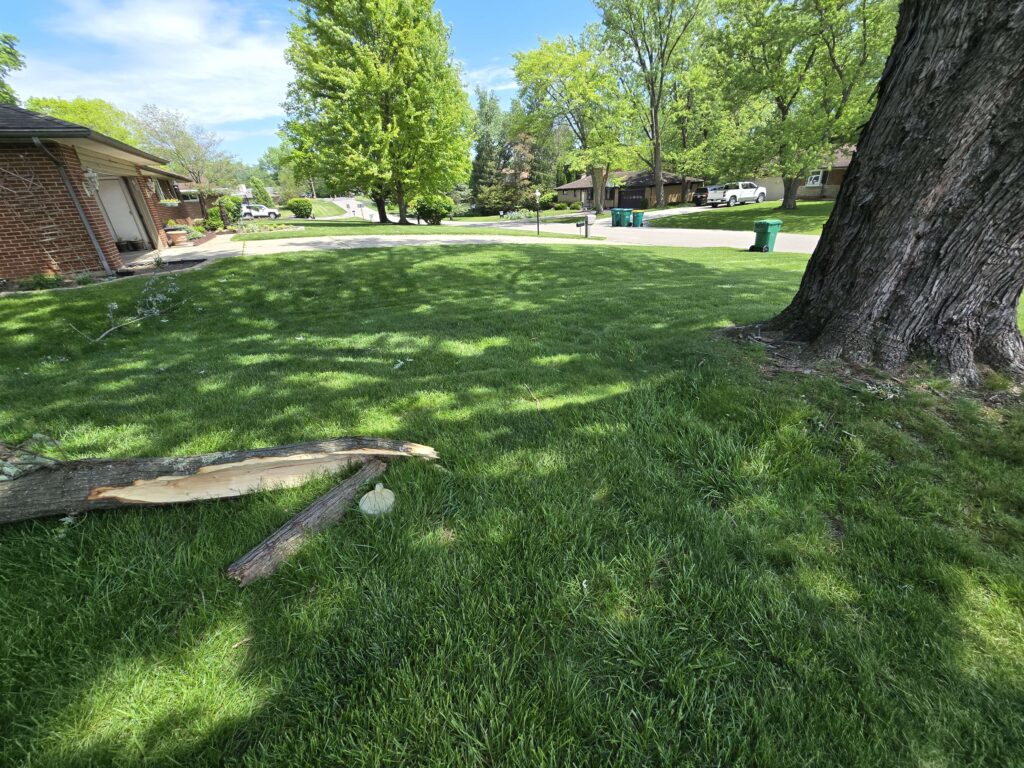
The limb came down across the edge of the roof, and the force of it did what wind alone rarely does: it split shingles, cracked fascia board, and tore a section of soffit loose from the eave. What was left afterward, scattered branches in the yard, a chipper truck idling on the street, neighbors out assessing their own trees, told the story of a storm that had moved through fast and hit unevenly, sparing some yards and landing squarely on others.
This one landed on the roof.
Assessing the Damage
By the time the branches were cleared away, the extent of the damage was clearer, and worse in some places than a glance from the yard would suggest.
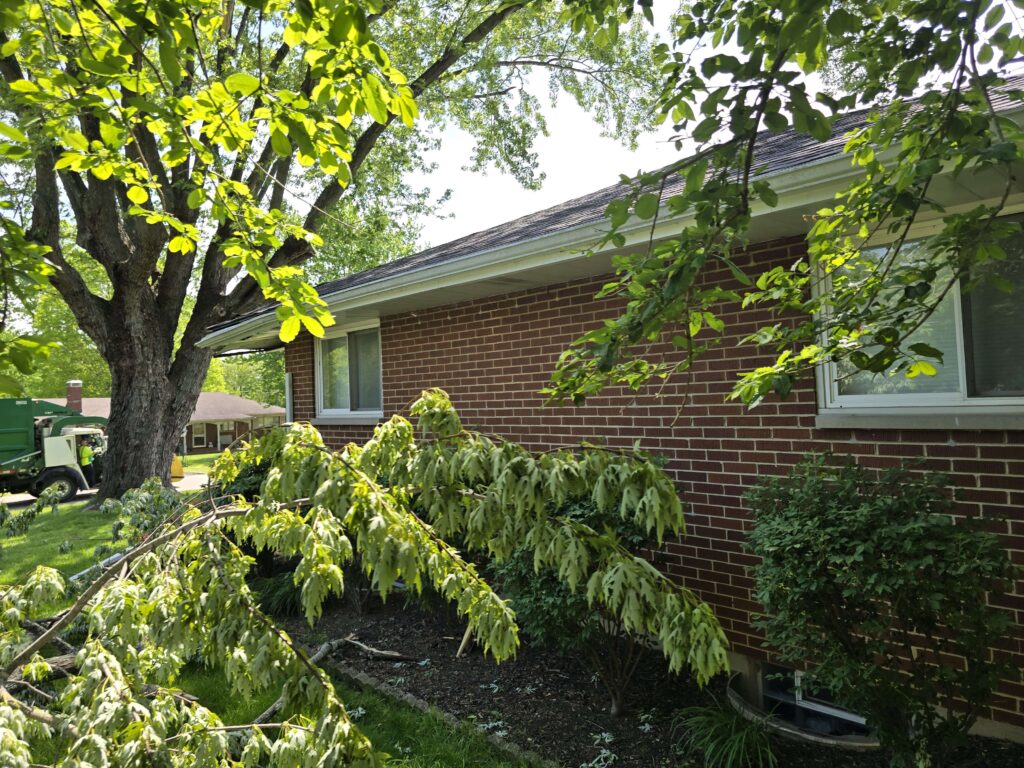
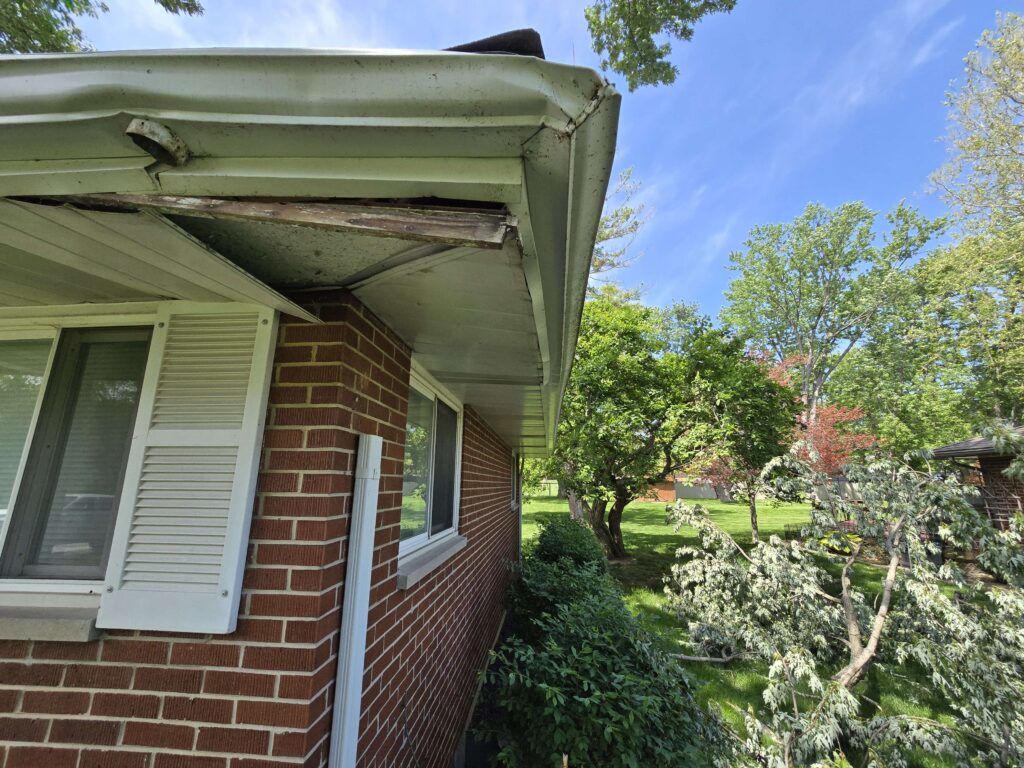
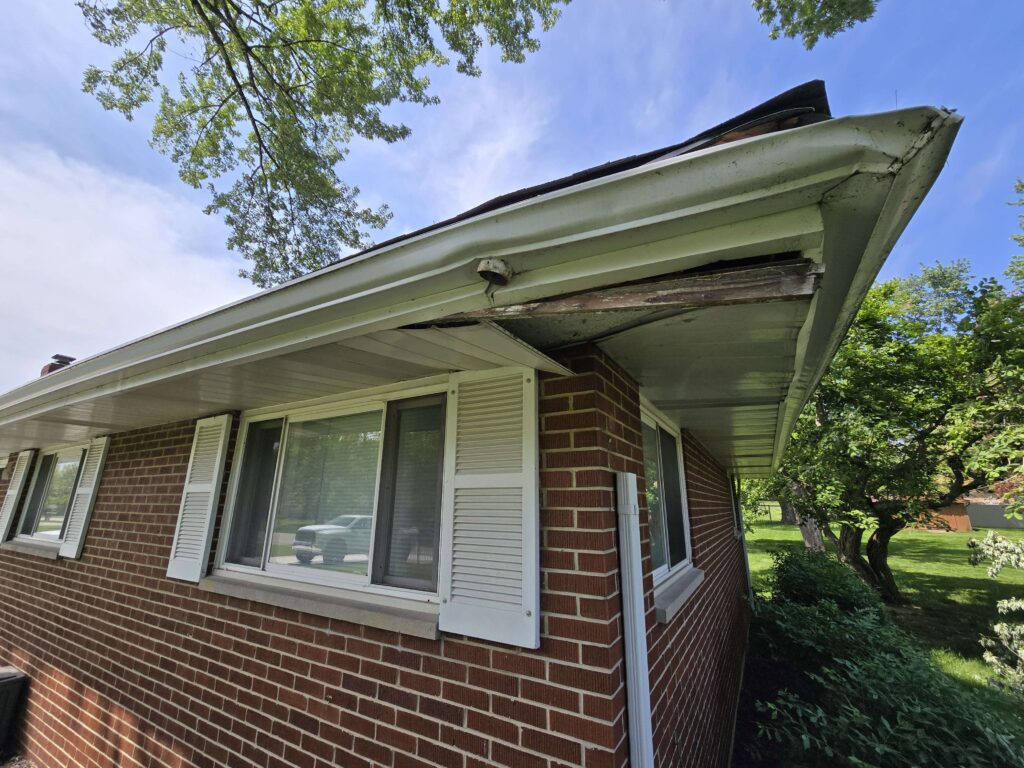
The soffit along one side of the house had split where the limb struck, leaving a section hanging loose enough to see straight through to the rafters above. A few feet over, the fascia board, the trim that runs along the roofline and normally hides the roof’s structural edge had cracked and pulled away entirely, exposing raw, weathered wood that had clearly been there for years before the storm ever made it worse.
On the roof itself, the damage was concentrated but serious: two full slopes needed attention, with shingles torn loose, sheathing exposed in places, and the underlying structure vulnerable to the next rain. It’s the kind of damage that looks contained from the driveway and turns out to be more involved once someone actually gets on a ladder.
That gap, between what a homeowner can see and what a roof actually needs, is usually where the next decision gets made: call the insurance company, or call a contractor first. In this case, both happened almost at once.
Working With Insurance
Storm damage rarely announces itself as a single, clean problem. A homeowner looking at a torn soffit and a cracked fascia board is usually also looking at a question: what does insurance actually cover, and how much of this is going to fall to them?
In this case, the answer came together the way it usually does, through a claim, an adjuster, and a scope of work that separated what needed to be done from what it would cost. The homeowner’s insurance approved the repair, and the resulting agreement covered labor for the soffit, fascia, and roof work, with materials supplied separately. It’s a common structure for storm-related claims, and one that can be confusing to homeowners encountering it for the first time.
What made the difference here wasn’t the paperwork itself, but the pace. Storm damage has a way of compounding, a torn shingle becomes a leak, a cracked fascia board becomes a home for moisture and rot. Every week spent waiting on approvals is a week the damage has to get worse before it gets better. Coordinating the claim and the repair timeline together, rather than treating them as separate problems, kept the gap between “damage discovered” and “damage fixed” as short as it could reasonably be.
Homeowners Often Ask
In most cases, yes. Standard homeowners insurance policies typically cover sudden, accidental damage caused by storms and falling trees, including damage to roofing, soffit, and fascia. Coverage details vary by policy, so it's worth contacting your insurance company as soon as damage occurs, documenting everything with photos, and requesting an inspection before any repair work begins. A contractor can often help identify and document damage that isn't obvious from the ground.
A labor-only contract covers the cost of the work itself — installation, repair, and cleanup — while materials like shingles, soffit panels, or lumber are supplied separately, often directly by the homeowner or through the insurance settlement. This structure is common on insurance-funded storm repairs, since it lets the claim cover materials and labor as distinct line items. It doesn't reflect the total value of the project, only the labor portion of it.
Timelines vary depending on the extent of the damage, weather conditions, and material availability, but the priority is always to move quickly once a claim is approved. Storm damage tends to worsen the longer it's left exposed — a torn shingle can become a leak, and a cracked fascia board can invite rot — so closing the gap between approval and repair is one of the most important parts of the process.
The Repair: Craftsmanship in Detail
Storm repair work rarely gets much attention if it’s done well. A roof that goes back together cleanly just looks like a roof, no seams showing, no evidence of what it took to get there. That’s by design, but it’s worth pausing on what actually happened between the torn shingles and the finished result.
Soffit and Fascia
The damaged soffit panels came out first, along with the sections of fascia board that had cracked or rotted through. Not just where the limb had struck, but a few additional feet where years of prior exposure had already weakened the wood beneath the paint. New sub-fascia lumber went in along the roofline, followed by rafter tail repairs where the old wood no longer had the structural integrity to hold fasteners properly. Only then did the new metal soffit and fascia go on, matched to the home’s existing color and profile so the repair reads as original rather than patched.
The Roof
The two damaged slopes came down to bare sheathing in the affected areas, and any plywood that had been compromised by the impact was replaced before anything else went back on. From there, the build-up followed the same order any roof gets rebuilt in: synthetic underlayment first, then ice-and-water shield along the vulnerable edges, then drip edge flashing to direct water away from the fascia that had just been rebuilt beneath it. Dimensional shingles went down last, chosen to match the manufacturer and profile of the surrounding roof as closely as possible. The goal on a partial repair is always for the new section to disappear into the old one, not stand apart from it. Starter strips, hip and ridge caps, and step flashing around the roof’s transitions finished the job.
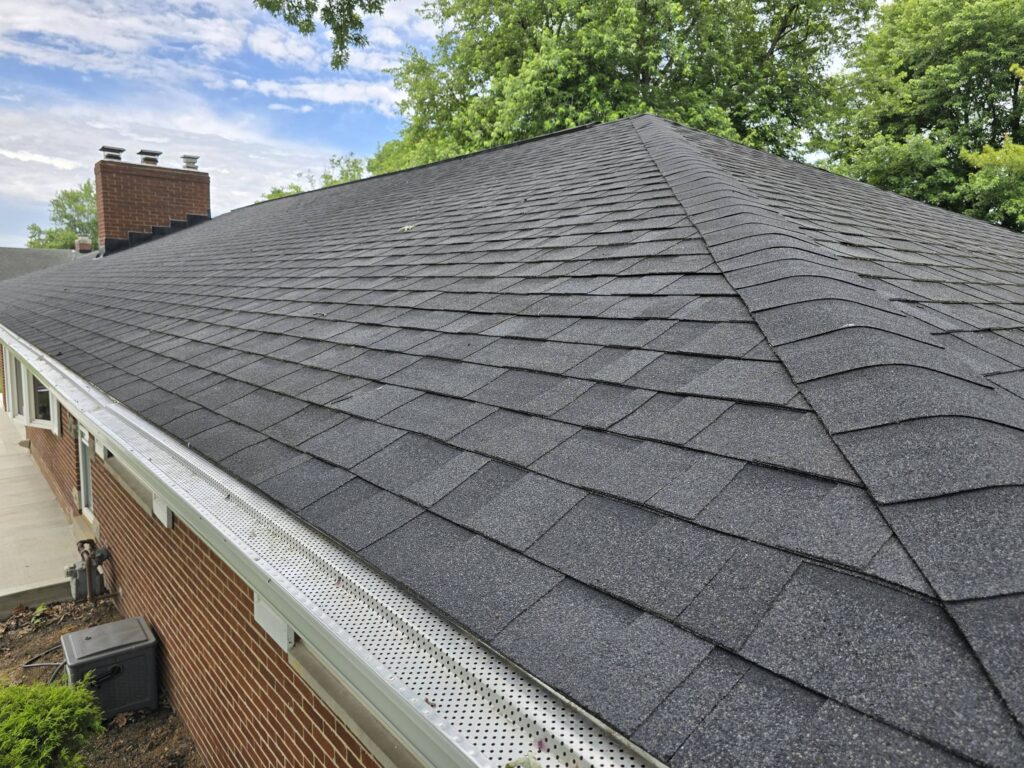
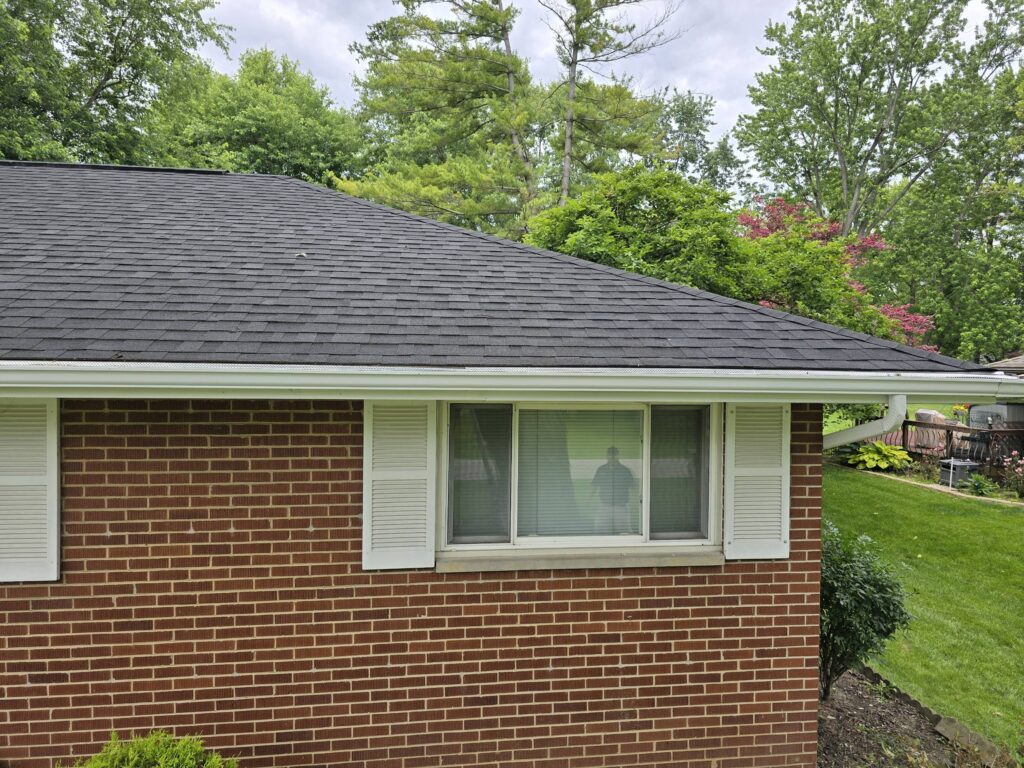
By the time the crew cleared out, the only sign that anything had happened was a slightly newer-looking stretch of roofline. Which, for storm repair, is exactly the point.
The Result
By the time the repair was finished, the house looked the way it had before the storm ever came through, which is the strange, quiet standard that good repair work gets held to. Nobody driving past this home would guess that a tree limb had torn open the roofline months earlier. That’s not an accident. It’s what happens when matched materials, careful sequencing, and a contractor who treats a partial repair with the same care as a full one all come together.
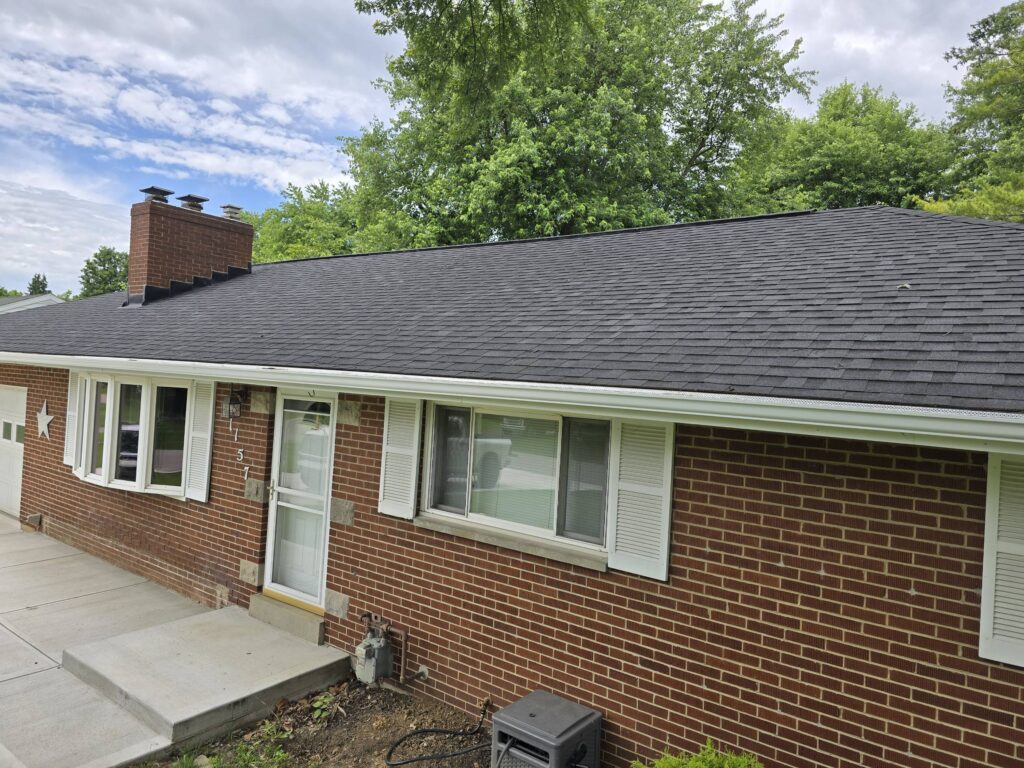
The roof holds. The fascia and soffit are sound again, not just patched. And the homeowner, who started this process staring at a hole where their roofline used to be, ended it with a home that’s protected against the next storm the same way it was protected before this one ever hit.
That’s really the whole job, in the end: not just fixing what broke, but making sure it doesn’t feel like anything broke at all.
Have Storm or Tree Damage?
If a storm has left your roof, soffit, or fascia damaged, don't wait for it to get worse. Get a free estimate for a repair like this one.
Get a Free Estimate